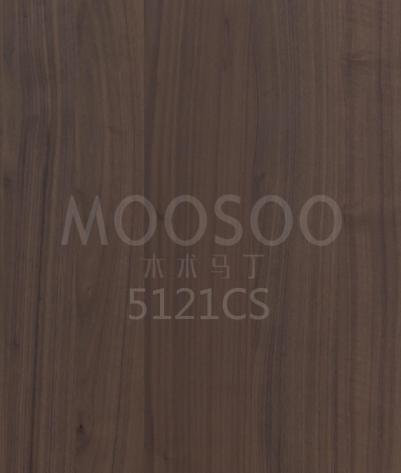
5121CS
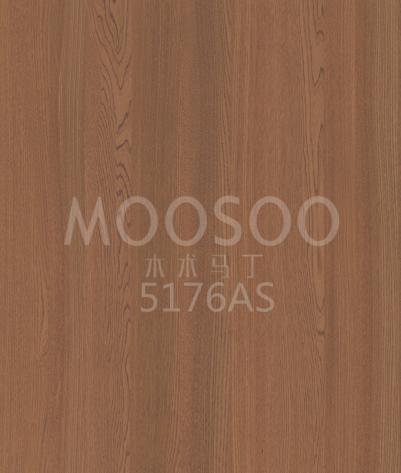
5176AS
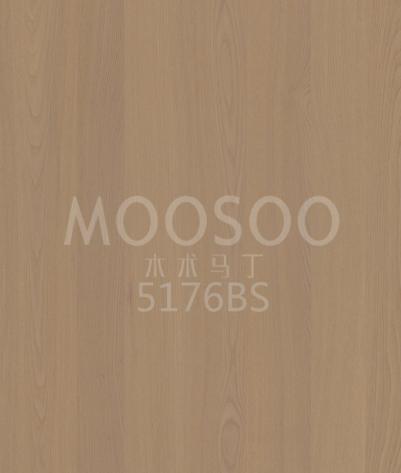
5176BS
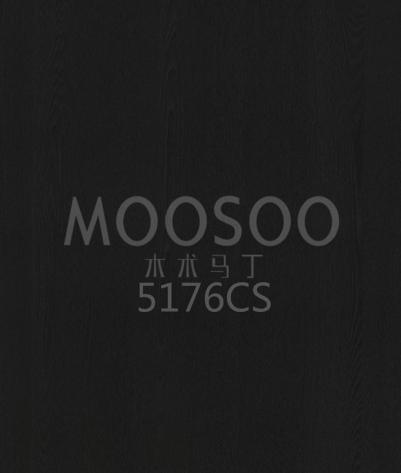
5176CS
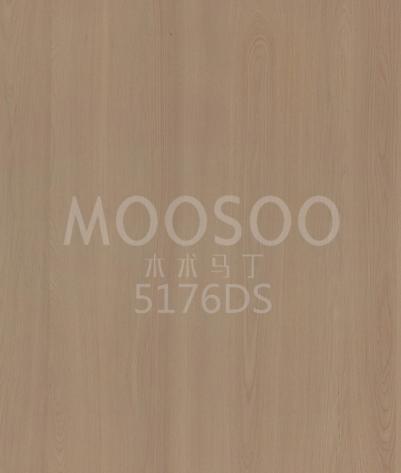
5176DS
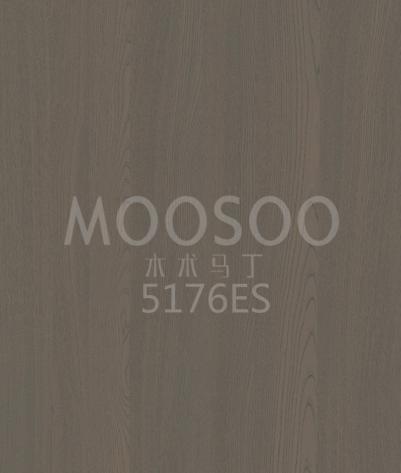
5176ES
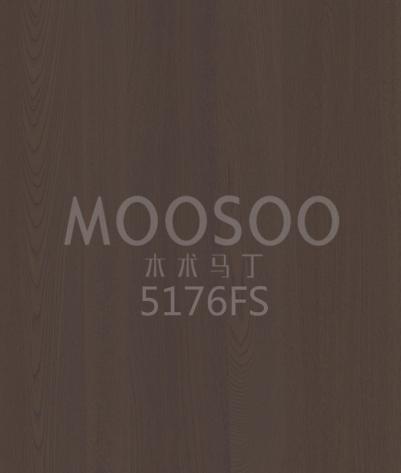
5176FS
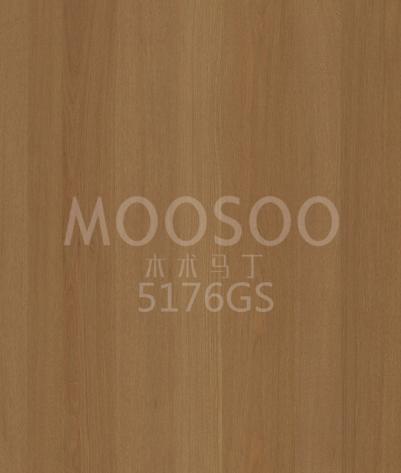
5176GS
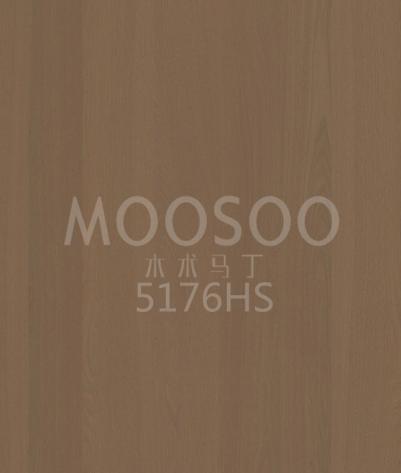
5176HS
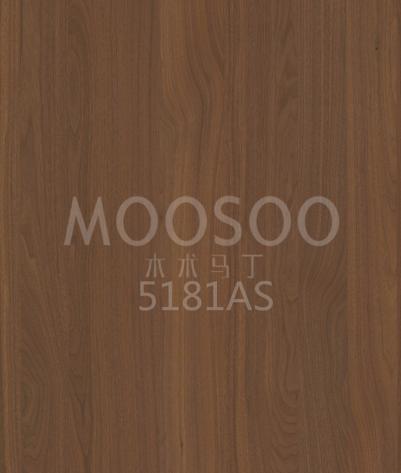
5181AS
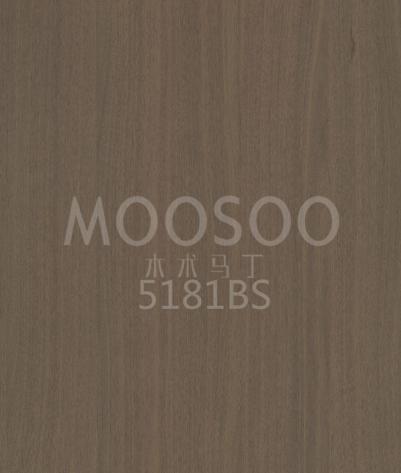
5181BS
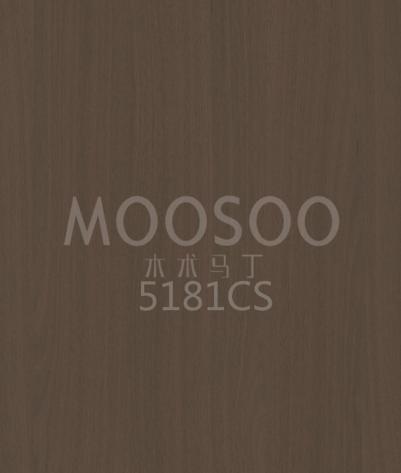
5181CS
Natural wood veneer is a precision-sliced facing material cut from genuine hardwood or softwood logs, typically ranging from 0.15 mm to 3.2 mm in thickness. Unlike solid timber, a single log can yield hundreds of matched veneer sheets, making it one of the most resource-efficient ways to bring authentic wood character into furniture, architectural panels, cabinetry, and millwork. MOOSOO's Natural Series is manufactured at our Zhejiang facility from sustainably sourced species including white elm, walnut, oak, and ash.
This page explains what natural wood veneer is, how it is made, how to choose the right species and cut, and why it outperforms competing surface materials on both aesthetic and environmental criteria. For decorative or digitally-printed alternatives, see our Art Series; for high-tech engineered surfaces, visit our Technology Series.
According to the Illustrated Dictionary of Building Materials and Techniques (Bianchina, 1993), veneer is defined as "a thin layer of wood applied over a base material, valued for its ornamental properties." The European standard EN 975-1 further classifies decorative veneer by grain regularity, knot frequency, and color homogeneity—criteria that directly govern the grading system used across our Natural Wood Veneer collection.
A key distinction exists between natural veneer and reconstructed (recomposed) veneer: natural veneer retains the original cellular structure, growth rings, and aromatic compounds of the parent log, whereas reconstructed veneer is dyed and laminated from fast-growing species. MOOSOO's Natural Series uses only genuine sliced timber, preserving what wood scientists call the "fingerprint" irregularities—knife-check marks, ray flecks, and micro-knots—that give each panel its irreproducible character.
At a glance — Natural Wood Veneer
The visual character of any natural wood veneer sheet is largely determined by how the log is oriented against the cutting knife. The four principal slicing methods—plain slicing, quarter slicing, rift slicing, and rotary peeling—produce distinctly different grain patterns, yield rates, and suitability profiles. The table below summarises each method based on data from the USDA Forest Products Laboratory Wood Handbook (2021) and the Architectural Woodwork Standards (AWI/AWMAC/WI, 2nd ed.).
| Cutting Method | Log Orientation | Grain Pattern | Typical Yield | Best Application |
|---|---|---|---|---|
| Plain (Flat) Slicing | Parallel to pith | Cathedral / cathedralled arch; bold figuring | High (~85 %) | Furniture panels, cabinet doors |
| Quarter Slicing | Perpendicular to annual rings | Straight, uniform; ray fleck prominent in oak | Medium (~60 %) | Architectural panels, luxury wall cladding |
| Rift Slicing | ~15–30° off radial | Fine, linear; minimal ray fleck | Low (~50 %) | Contemporary/minimalist interiors |
| Rotary Peeling | Spun on lathe around pith | Wide, wild grain; variegated figuring | Very high (~95 %) | Plywood core, structural applications |
Sources: USDA Forest Products Laboratory, Wood Handbook — Wood as an Engineering Material, General Technical Report FPL-GTR-282, 2021; AWI/AWMAC/WI, Architectural Woodwork Standards, 2nd ed., 2014.
MOOSOO primarily employs plain slicing and quarter slicing for the Natural Series, balancing ornamental appeal with material efficiency. Browse individual Elm Veneer Panels and Elm Wall Panels to see how each cut method translates into finished product aesthetics.
Species selection is the single most important decision when specifying natural wood veneer. Hardness (Janka scale), dimensional stability, and grain uniformity each influence how the finished panel performs over decades of use. The following data is drawn from the USDA Wood Handbook (2021) and the Properties of Wood and Structural Wood Products (Kretschmann, 2010).
| Species | Janka Hardness (lbf) | Avg. Density (kg/m³) | Grain Character | Primary Use in Veneer | Stability Rating |
|---|---|---|---|---|---|
| White Elm (Ulmus pumila) | 1,320 | 560–620 | Interlocked, wavy; rich knot figure | Furniture, wall panels, flooring | Good |
| American Walnut (Juglans nigra) | 1,010 | 590–640 | Straight to slightly wavy; chocolate tones | Premium furniture, luxury joinery | Excellent |
| European Oak (Quercus robur) | 1,290 | 630–680 | Prominent ray fleck (quartered); versatile | Architectural panels, cabinetry | Very Good |
| White Ash (Fraxinus americana) | 1,320 | 600–660 | Coarse, bold straight grain; pale cream | Sports facilities, modern interiors | Good |
| Maple (Acer saccharum) | 1,450 | 690–740 | Fine, uniform; occasional bird's-eye figure | Cabinetry, high-traffic surfaces | Very Good |
| Teak (Tectona grandis) | 1,070 | 630–720 | Coarse; golden-brown; natural oil content | Marine, outdoor-adjacent, luxury | Excellent |
Sources: Kretschmann, D.E. (2010). Mechanical Properties of Wood. In: Wood Handbook, USDA FPL-GTR-190; Wagenführ, R. (2007). Holzatlas [Atlas of Wood], 6th ed., Hanser Verlag.
MOOSOO's most-requested species within the Natural Series is White Elm. View the full range of Elm Engineered Wood Panels, Solid Elm Wood Panels, and our High-End White Elm Solid Wood Panels.
Designers and procurement managers frequently ask how natural wood veneer stacks up against solid wood and high-pressure laminate (HPL). The comparison below draws on lifecycle assessments published by the Forest Stewardship Council and surface durability data from Hoadley, R.B. (2000). Understanding Wood. The Taunton Press.
| Criterion | Natural Wood Veneer | Solid Wood | High-Pressure Laminate |
|---|---|---|---|
| Authenticity of grain | ✅ 100 % real wood | ✅ 100 % real wood | ❌ Printed simulation |
| Material efficiency | ✅ Very high (40× yield) | ❌ Low (1× yield) | ✅ High (synthetic) |
| Dimensional stability | ✅ Excellent (substrate controls movement) | ⚠️ Moderate (moves with humidity) | ✅ Very high |
| Repairability | ⚠️ Limited (thin face layer) | ✅ Full sanding / re-finishing | ❌ Generally not repairable |
| Cost per m² | Medium | High – Very High | Low – Medium |
| Carbon footprint | ✅ Low (biogenic carbon storage) | ✅ Low | ⚠️ Moderate–High (resin, energy) |
| Unique pattern per panel | ✅ Yes — each sheet unique | ✅ Yes | ❌ Repeated print pattern |
| Formability / curved surfaces | ✅ Flexible; adheres to curves | ❌ Limited | ⚠️ Post-form only |
Sources: Hoadley, R.B. (2000). Understanding Wood: A Craftsman's Guide to Wood Technology. The Taunton Press; FSC (2022). Environmental Benefits of Responsible Forest Management. FSC International.
Grading determines which panels are suitable for premium exposed surfaces and which are reserved for secondary applications. Three major grading frameworks apply to natural wood veneer traded globally.
| Standard | Region | Grade Levels | Key Evaluation Criteria |
|---|---|---|---|
| EN 975-1 | Europe | A, B, C, D | Knot size/frequency, grain regularity, discoloration, splits |
| HPVA HP-1 | North America | AA, A, B, C, D, E | Natural character, pin knots, mineral streaks, color match |
| GB/T 13010 | China | Premium, Grade 1, Acceptable | Thickness tolerance ±0.05 mm, warp, surface defects, bond strength |
Sources: CEN (2009). EN 975-1: Sawn timber — Appearance grading of hardwoods; HPVA (2016). HP-1: Hardwood and Decorative Plywood; SAC (2013). GB/T 13010: Sliced Veneer.
MOOSOO inspects every batch against GB/T 13010 Premium (优等品) criteria before export, and can supply EN 975-1 Grade A certification documentation upon request. Contact our team via the enquiry page for technical data sheets.
The breadth of applications for natural wood veneer has expanded significantly since the 1990s, driven by advances in adhesive chemistry, CNC machining, and flexible backing systems. The following segments represent the primary demand categories.
Bedroom sets, dining tables, office desks, and storage cabinets use veneer to achieve the look of rare species at scale. Panels such as our Elm Prefabricated Wood Panels are engineered for direct application over MDF or plywood substrates.
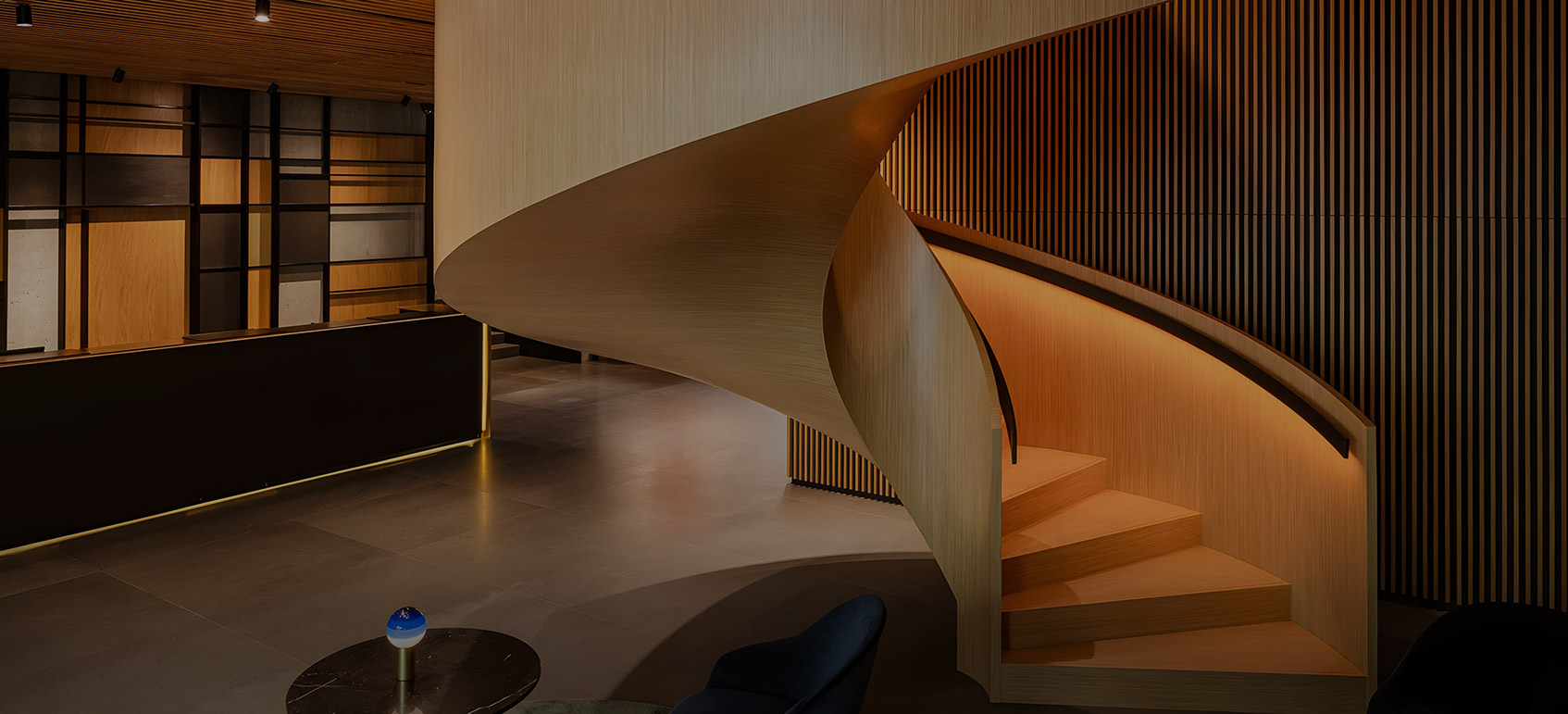
Hotels, corporate lobbies, and luxury residences specify veneer wall panels for acoustic warmth and biophilic design impact. See our Asian Elm Cladding Panels and Elm Wall Panels.
Engineered flooring boards use a 0.6–3.0 mm natural veneer wear layer bonded to HDF, combining the warmth of real wood with engineered stability. Our Elm Flooring Panels are designed for this application.
Flush doors, skirting boards, cornices, and bespoke staircase components are frequently veneered to achieve grain continuity across an entire floor or building elevation.
High-footfall retail environments benefit from the durable, high-end appearance of veneered display fixtures, POS counters, and feature walls—with replacement costs far lower than solid timber.
Artisan furniture makers and restoration specialists use thin-sliced natural veneer for inlay work, parquetry, and the restoration of antique pieces where matching original grain is essential.
The IPCC Sixth Assessment Report (AR6, 2022, Chapter 7) identifies wood products as a key climate-mitigation tool because they store biogenic carbon throughout their service life and substitute for fossil-intensive materials such as aluminium and PVC. According to the USDA Forest Products Laboratory, a 1 m³ volume of wood products sequesters approximately 250 kg of CO₂-equivalent while avoiding roughly 2 tonnes of CO₂-equivalent in upstream processing emissions compared with functionally equivalent steel or concrete elements.
Natural wood veneer maximises these benefits by extracting the maximum decorative surface area from each log. A single 1 m³ elm log can yield approximately 1,200–1,600 m² of 0.6 mm decorative veneer—area that would require between 40 and 60 equivalent solid-wood logs to match. MOOSOO sources timber exclusively from managed plantation forests, supporting China's national afforestation programme and applicable import documentation under the EU Timber Regulation (EUTR) and US Lacey Act.
For full environmental product declarations (EPD), chain-of-custody certificates, and species origin documentation, please visit our production overview page or contact our team directly.
Whether you are an interior designer, a furniture OEM, or a wholesale distributor, the following specification checklist—adapted from the Architectural Woodwork Standards (AWI, 2nd ed., 2014)—will help you communicate requirements precisely and avoid costly substitutions.
Decorative face veneer typically ranges from 0.5 mm to 1.0 mm; thicker commercial veneers (1.5–3.2 mm) are used for flooring and high-wear applications. Thicker veneers tolerate more sanding cycles and edge profiling. According to Hoadley (2000), a 0.6 mm veneer can still accept fine sanding and re-coating if used with appropriate finishing schedules.
Natural veneer is sliced directly from a log and retains the species' original cellular structure, colour variation, and aromatic compounds. Engineered veneer is manufactured by dyeing fast-growing wood, reassembling it into a block, and re-slicing to simulate exotic species. Natural veneer offers genuine character; engineered veneer offers colour consistency and controlled grain repeat. MOOSOO's Natural Series uses only genuine sliced timber. For engineered options, see the Art Series.
Veneer can be specified in moisture-prone areas when: (a) a waterproof MR or WBP-bonded substrate is used, (b) the face is finished with a polyurethane or catalysed lacquer sealing all edges, and (c) the panel is not in direct contact with standing water. For semi-exposed areas such as kitchen cabinet doors, our factory-finished elm panels with UV-cured lacquer are widely installed without moisture-related issues.
MOQ varies by species, cut, and panel size. As a general rule, container-load quantities (typically 20–22 m³ per 20' FCL) unlock the most competitive pricing. Smaller sample orders are accepted for qualification testing. Please contact our sales team with your specification to receive a tailored quotation.
The AWI Architectural Woodwork Standards recommend acclimatising veneered panels in the installation environment for a minimum of 72 hours, stored flat, off the floor, in stacks of no more than 50 sheets with stickers every 400 mm. Target equilibrium moisture content (EMC) of 6–8 % for interior applications. Humidity at installation should be within ±5 % RH of the expected in-service range to avoid visible gapping or buckling.
Ready to source premium Natural Wood Veneer?
Explore the full Natural Series catalogue, review our design case studies, or speak directly with our team.
Request a Quote →