


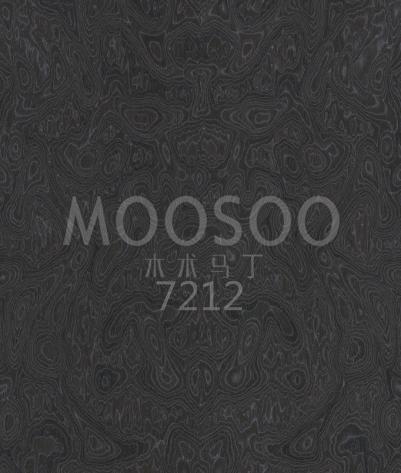
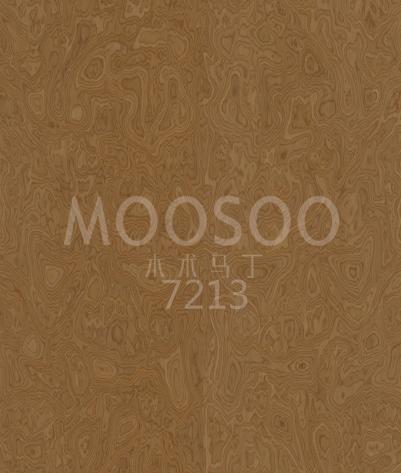
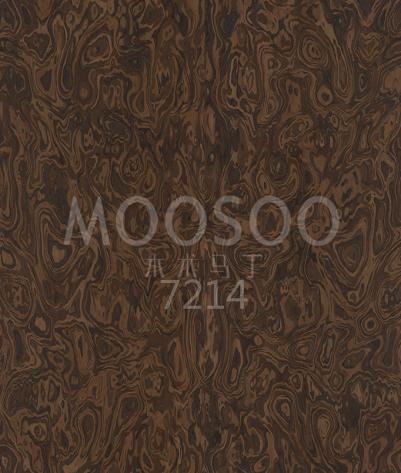
What Is a Wood Veneer Sheet?
A wood veneer sheet is a thin slice of real wood, typically ranging from 0.15 mm to 0.60 mm in thickness, that is bonded to an engineered substrate such as MDF, plywood, or particleboard. According to Hoadley's Understanding Wood (2nd ed., Taunton Press, 2000), veneering is among the oldest wood-conservation techniques in recorded history, with archaeological evidence of veneer applications found in ancient Egyptian furniture dating back to 3500 BCE.
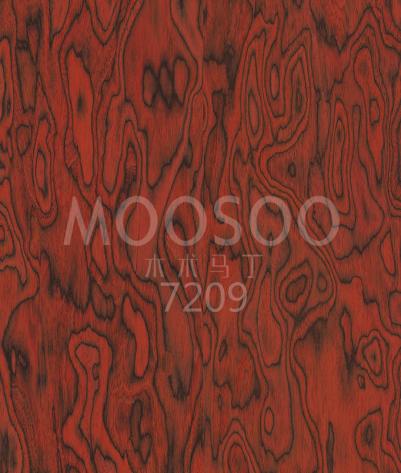
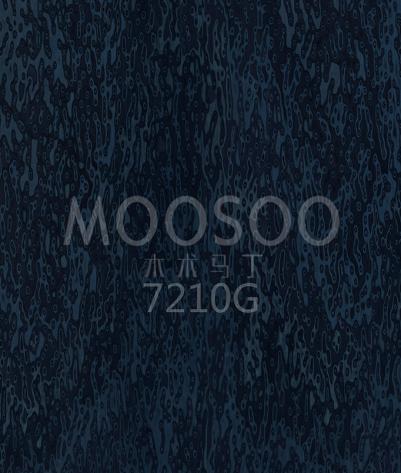
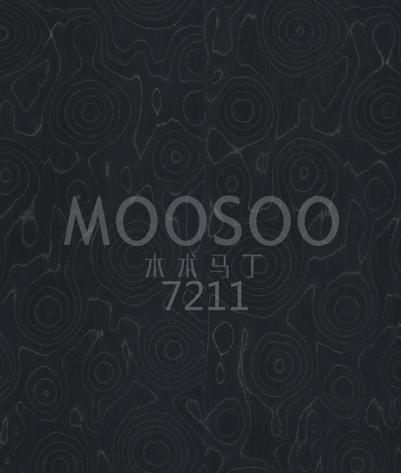
In contemporary manufacturing, wood veneer sheets are produced using several slicing methods — rotary cut, flat (plain) sliced, quarter sliced, and rift cut — each yielding a distinct grain figure. The Art Series by MOOSOO emphasizes flat-sliced and reconstructed veneer techniques, which maximise the visual figure of the face grain and allow precise colour matching across large panel runs.
The global decorative wood veneer market was valued at approximately USD 2.8 billion in 2023 and is projected to reach USD 4.1 billion by 2030, driven by demand for resource-efficient luxury materials in commercial interior fit-outs and premium residential furniture (Grand View Research, Decorative Wood Veneer Market Report, 2024).
0.15–0.60
mm Thickness Range
20+
Art Series SKUs
FSC
Certified Timber Sources
E0/E1
Formaldehyde Emission
Technical Specifications of the Art Series Wood Veneer Sheet
The following table consolidates the principal technical parameters applicable to MOOSOO Art Series panels. Dimensional stability and surface hardness figures reference standard testing under ISO 3349 (veneer thickness) and EN 13722 (surface gloss measurement).
| Parameter | Specification | Test Standard |
|---|---|---|
| Nominal thickness | 0.15 / 0.20 / 0.30 / 0.45 / 0.60 mm | ISO 3349 |
| Panel width | Up to 1,280 mm (custom available) | Factory standard |
| Panel length | 2,440 mm / 2,800 mm / custom | Factory standard |
| Formaldehyde emission | ≤ 0.05 mg/m³ (E0); ≤ 0.10 mg/m³ (E1) | GB/T 17657, EN 13986 |
| Surface treatment options | Raw, UV lacquered, wire-brushed, embossed | — |
| Glue line type | Urea-formaldehyde (UF) / MDI (low emission) | ISO 12466-1 |
| Bond shear strength (dry) | ≥ 1.0 N/mm² | EN 314-1 |
| Surface gloss (satin finish) | 15–30 GU (gloss units) | EN 13722 |
Art Series vs. Natural Series vs. Technology Series
MOOSOO offers three distinct product lines for interior designers and furniture manufacturers. Understanding the differentiation helps specifiers select the correct wood veneer sheet for each project type.
| Feature | Art Series | Natural Series | Technology Series |
|---|---|---|---|
| Veneer type | Reconstructed / Sliced | Raw sliced natural | Engineered / synthetic-backed |
| Colour consistency | ⬛⬛⬛⬛⬛ Excellent | ⬛⬛⬛⬜⬜ Moderate | ⬛⬛⬛⬛⬜ Very Good |
| Rare species availability | High (reengineered grain) | Limited | N/A |
| Typical substrate | MDF, plywood, particleboard | MDF, plywood | MDF, PVC, aluminium |
| Best application | High-end furniture & joinery | Residential cabinetry | Hospitality & commercial |
| Sustainability rating | FSC certified, reduced waste | FSC certified | Low-VOC backing |
Wood Veneer Sheet Slicing Methods: A Technical Overview
The cut angle relative to the growth rings fundamentally determines the figure and stability of a wood veneer sheet. The table below summarises the four principal methods referenced in the HPVA (Hardwood Plywood & Veneer Association) Decorative Hardwood Plywood Standard ANSI/HPVA HP-1-2020.
| Method | Grain Pattern | Typical Use | Dimensional Stability |
|---|---|---|---|
| Flat (Plain) Sliced | Cathedral cathedrals and straight grain alternating | Furniture faces, wall panels | Moderate |
| Quarter Sliced | Straight, tight grain; medullary rays visible | Doors, cabinet fronts, flooring | High |
| Rotary Cut | Wide, bold, irregular grain | Utility plywood backing, economy panels | Moderate–Low |
| Reconstructed (Engineered) | Uniform, customisable grain colour & pattern | Art Series, luxury joinery, matched sets | Very High |
Applications of Art Series Wood Veneer Sheets
The Art Series wood veneer sheet is engineered to perform across a wide spectrum of interior applications. Each sub-series — from the Walnut KD Furniture Board through to SKUs 7202–7208 — is optimised for the following project contexts:
Furniture
Case goods, bed frames, wardrobes, dining tables. Art Series veneers deliver the heirloom appearance of solid walnut or ash at a fraction of the mass and material cost.
Cabinetry
Kitchen cabinets, bathroom vanities, built-in storage systems. The consistent colour matching of reconstructed veneer ensures seamless door-to-door bookmatching across long runs.
Wall Paneling
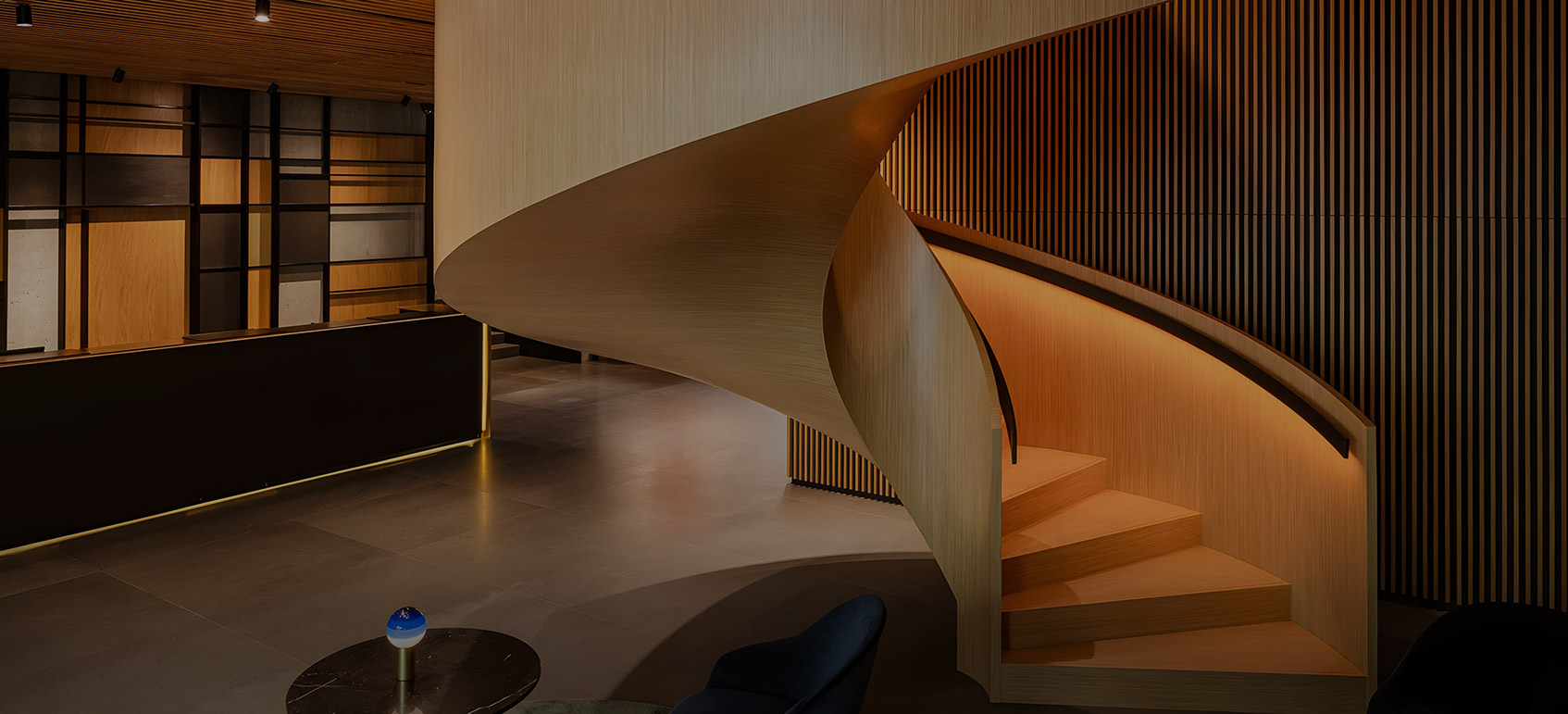
Accent walls, hotel lobbies, executive offices. Art Series panels can be supplied in sequence for running match or book match layouts, meeting specification requirements of commercial interior standards.
Doors & Millwork
Flush doors, stair components, skirting, and coving. The 0.30 mm and 0.45 mm thickness options are particularly suited to profile wrapping and postforming operations.
Sustainability and Environmental Credentials
Wood veneer sheets represent one of the most resource-efficient ways to specify real wood in interior design. Because a single log can yield between 40 and 200 times more surface coverage as veneer than as solid timber (Forest Products Laboratory, Wood Handbook, USDA Forest Service, 2021), the ecological footprint per square metre of finished surface is substantially lower.
MOOSOO sources all Art Series timber from FSC-certified forests (Forest Stewardship Council standard FSC-STD-01-001) and maintains chain-of-custody documentation from log to finished panel. The reconstructed veneer process further reduces pressure on rare tropical species by reengineering readily available fast-growth plantation species to replicate premium grain aesthetics.
All adhesives used in Art Series panels conform to the E0 and E1 formaldehyde emission thresholds specified under Chinese national standard GB/T 17657 and the European standard EN 13986. Products intended for the North American market are also compliant with CARB Phase 2 requirements (California Air Resources Board, Title 17 CCR Section 93120).
Frequently Asked Questions — Wood Veneer Sheet
What is the standard thickness of a wood veneer sheet?
Standard decorative wood veneer sheets range from 0.15 mm to 0.60 mm. For furniture face applications, 0.30 mm or 0.45 mm is the most common specification. Thinner veneers (0.15–0.20 mm) are used in high-pressure laminate (HPL) processes, while 0.60 mm sheets offer greater sanding allowance for solid-wood aesthetics.
How does a reconstructed wood veneer sheet differ from a natural veneer?
A natural veneer is sliced directly from a log, meaning grain colour and figure vary between leaves and flitches. A reconstructed (engineered) veneer — the hallmark of the Art Series — is produced by dyeing and relaminating natural wood fibres into controlled blocks, then re-slicing. The result is a consistent, reproducible grain that can precisely replicate exotic species or custom colour specifications across unlimited quantities.
Can Art Series wood veneer sheets be curved or postformed?
Yes. The 0.15 mm and 0.20 mm variants are suitable for postforming onto curved substrates with bend radii down to approximately 50 mm when the substrate is properly prepared and the adhesive line is activated under vacuum press. Thicker sheets (0.45 mm+) are better suited to flat panel applications.
What is the minimum order quantity for the Art Series?
MOOSOO accommodates both sample orders and volume production. For project-specific matching and custom colour development, contact the sales team to discuss MOQ and lead times, which vary by SKU and surface treatment specification.
How should a wood veneer sheet be stored before installation?
Store flat on a level surface in a dry environment at 15–25 °C and 45–65% relative humidity. Avoid direct sunlight and moisture contact. Panels should be acclimated to the installation environment for a minimum of 72 hours before bonding to prevent differential expansion after installation (HPVA HP-1-2020, Section 7.3).
Explore More Collections
Browse the full MOOSOO wood veneer sheet range to find the series that fits your project specification.